


Classification
 Nomenclature
Scientific Name:
Camptochaete arbuscula (Sm.) Reichardt, Reise Novara 1, 191 (1870) var. arbuscula
 Description

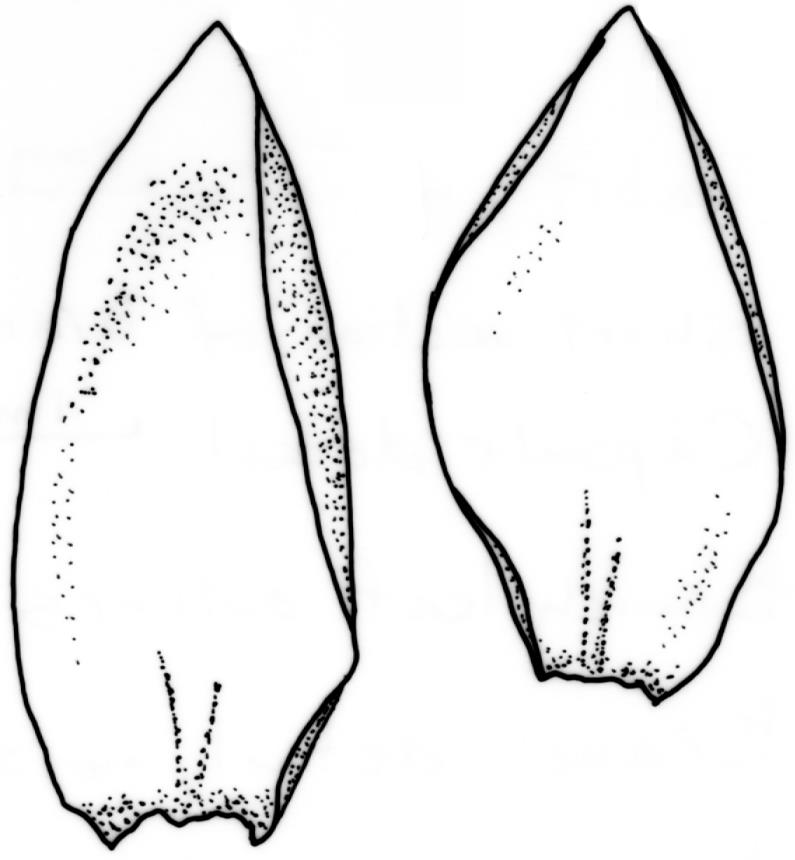
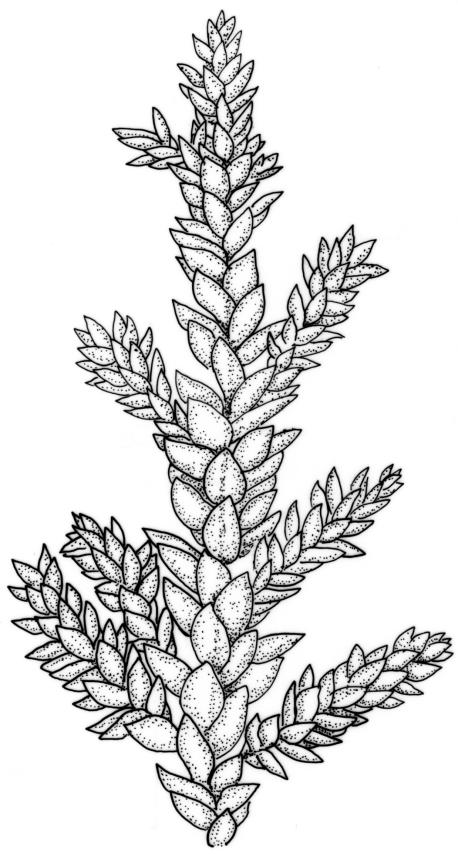
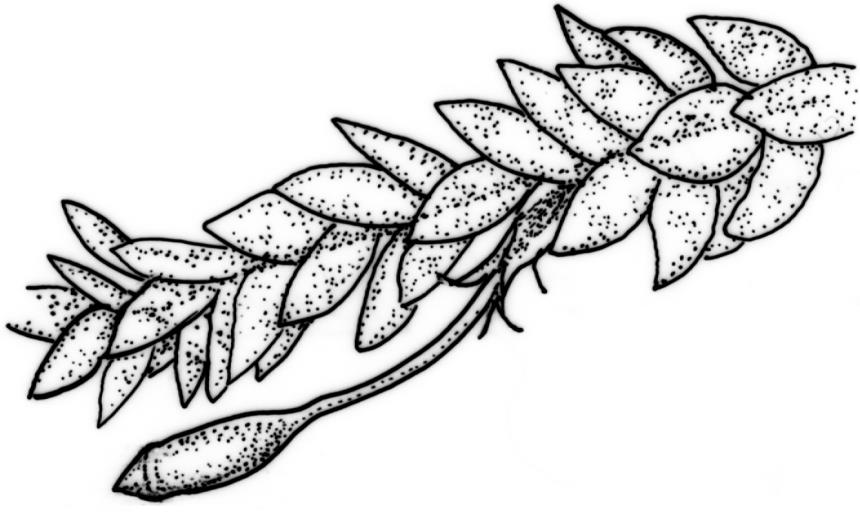
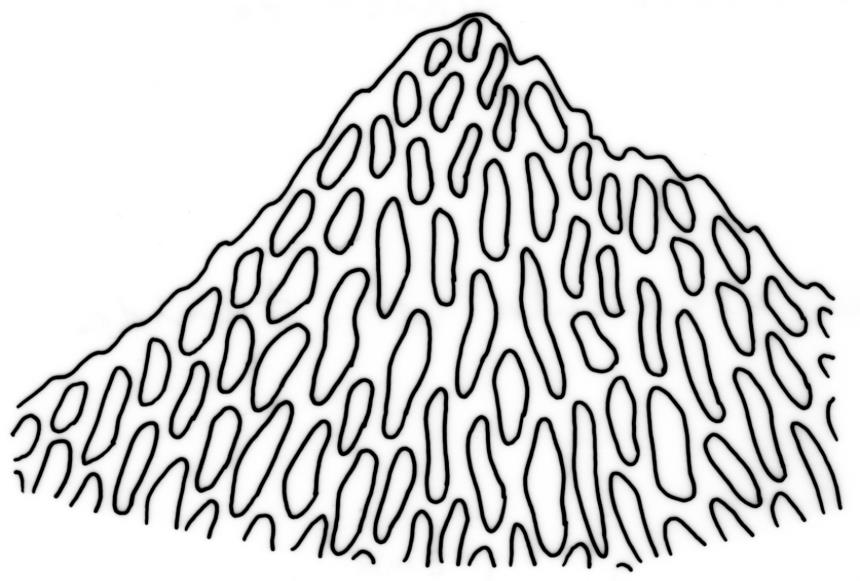
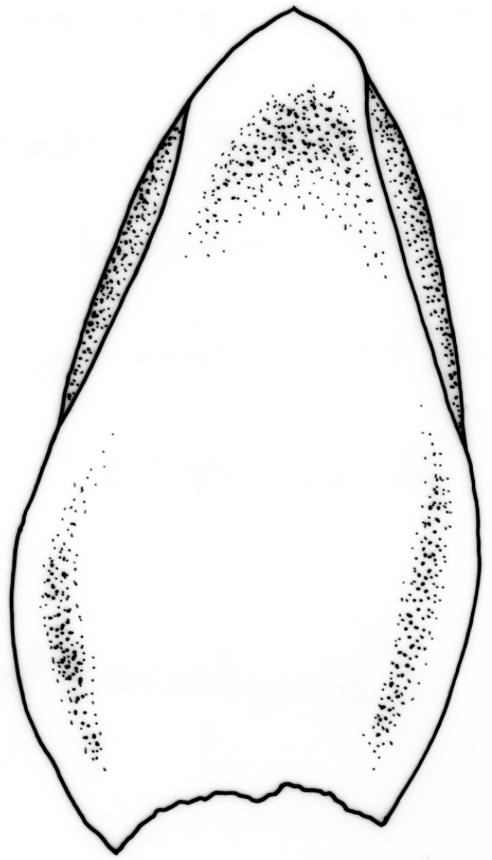
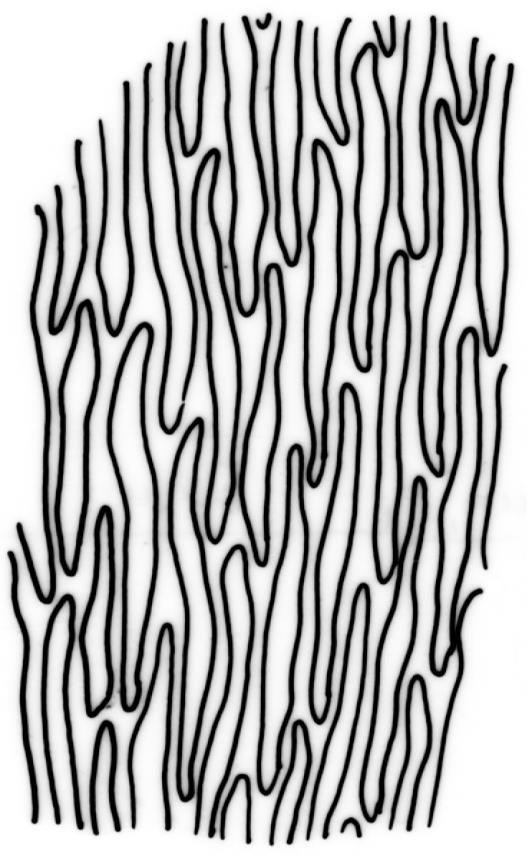
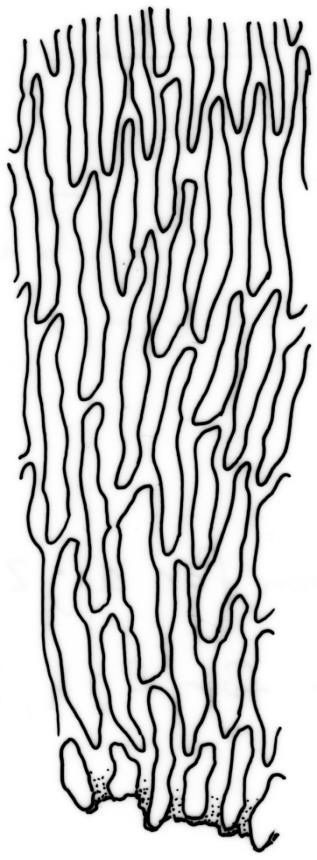
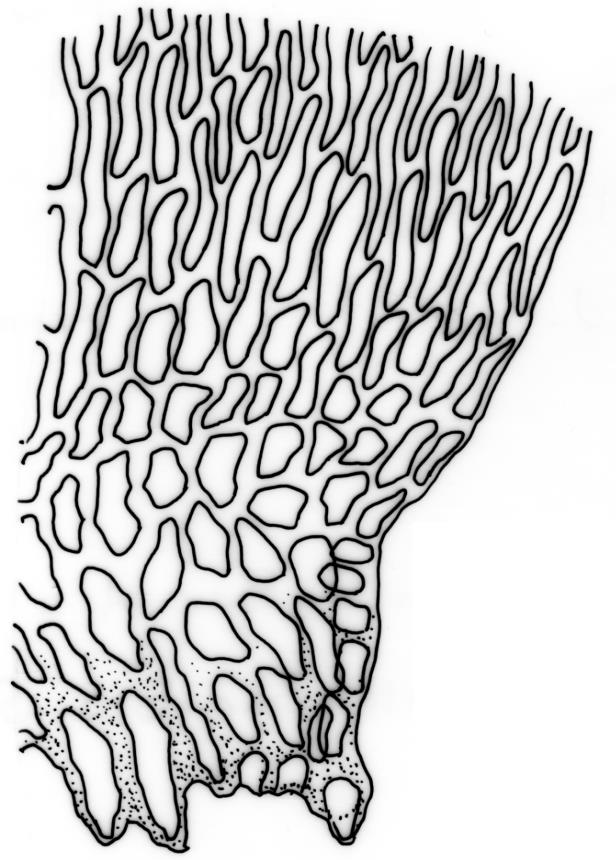
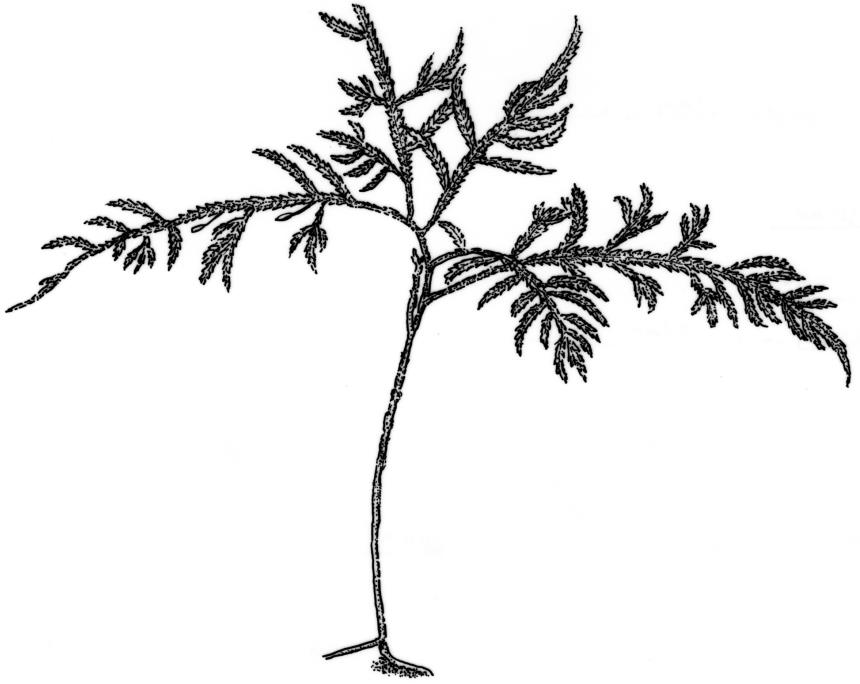
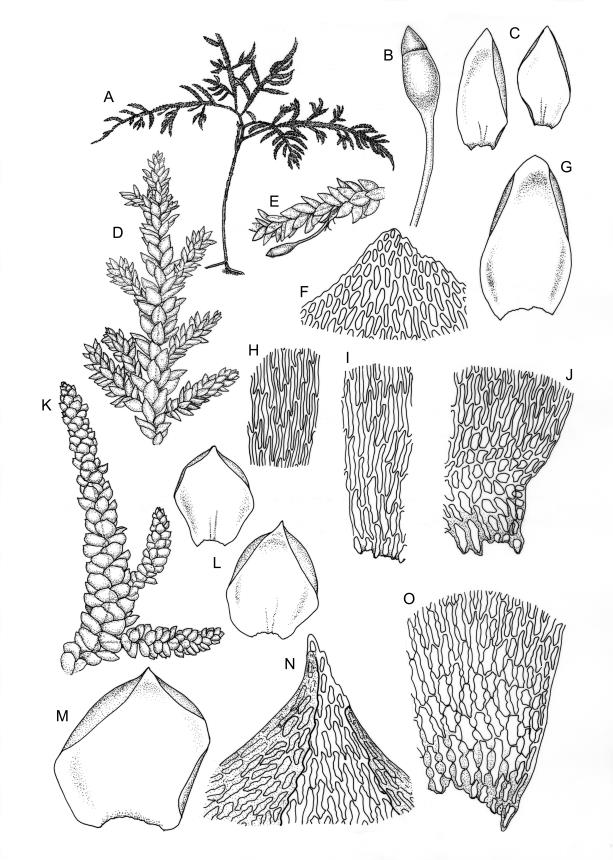
Plants 40–60 (–100) mm, light green to brown or yellow-green. Fronds irregularly 1(–2)-pinnate, complanate, loose and untidy. Stipes (10–) 15–20 mm. Branches mostly straight, complanate or sometimes loosely julaceous, attenuate and loosely cuspidate. Frond axis leaves imbricate, concave, ovate-oblong, with the apex erect, obtuse to widely acute, (1.9–) 2.2–2.5 (–3.0) × 1.2–1.6 mm, entire. Branch leaves complanate to loosely spiralled, 1.2–1.7 × 0.6–0.8 (–1.0) mm. Mid laminal cells (50–) 60–75 (–95) × 5 µm; those above (at extreme apex) 8–12 µm; alar cells forming group c. 12 cells wide and extending 8 cells from the leaf base.

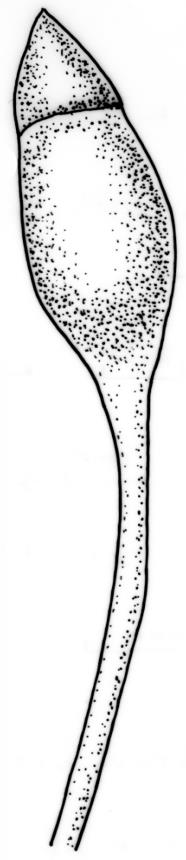
Setae 4–5 mm. Capsules held below the frond, ± erect, 1.8–2.0 × 1.0 mm; exothecial cells mostly 36–60 × 15–20 µm. Exostome teeth c. 575 µm long and inserted c. 75 µm below the mouth.

 Recognition

C. arbuscula (var. arbuscula) may be confused with C. deflexa, which has more regular fronds, with leaves, especially branch leaves, very regularly imbricate and little altered when dry. Differences between C. arbuscula and C. deflexa are discussed under the latter species. Some monopodial forms with elongate creeping stems are similar to Weymouthia cochlearifolia, from which fertile plants of C. arbuscula differ in their shorter setae and reflexed perichaetia. In sterile material, non-dendroid, monopodial forms of C. arbuscula lack strongly porose mid laminal cells, and W. cochlearifolia​​​​​​​ is also a generally larger, softer plant with wider branches compared to the more compact and wiry plants of C. arbuscula.

 Distribution

NI: N Auckland, including offshore islands (PK, HC, RT, LB, GB), S Auckland, Gisborne, Hawke’s Bay, Taranaki (Taranaki Maunga), Wellington; SI: Nelson, Marlborough, Canterbury, Westland, Otago, Southland; St; Ch; Sn; A; C.

Australasian. Tasmania*, mainland Australia (Vic.*); also Hawaiʻi*.

 Habitat

Common in lowland forests across a range of habitats including stream banks and the forest floor. It is most commonly on bark and exposed roots and occasionally found on rocks and rotten logs; rarely on the ground. It also extends to higher altitudes and to open edge habitats. Altitudinal range: from sea level to 1080 m on South I. (Mt Mytton, NW Nelson), and to 1200 m (Mt Ruapehu) on North I.
 Biostatus
Indigenous (Non-endemic)
 Images
 Bibliography
Beever, J.E.; Allison, K.W.; Child, J. 1992: The Mosses of New Zealand. Edition 2. University of Otago Press, Dunedin.
Bridel, S.-E. 1827: Bryologia Universa seu systematica ad novam methodum dispositio, historia et descriptio omnium muscorum frondosorum huscusque cognitorum cum synonymia ex auctoribus probatissimis. Vol. 2. Barth, Leipzig.
Hooker, W.J. 1819–1820: Musci Exotici, containing figures and descriptions of new or little known foreign mosses and other cryptogamic subjects. Vol. 2. Longman, Hurst, Rees, Orme and Brown, London.
Kindberg, N.C. 1902: Grundzüge einer Mongraphie der Laubmoosgattung Thamnium. Hedwigia 41: 203–268.
Mitten, W. 1859 ("1860"): Description of some new species of Musci from New Zealand and other parts of the southern hemisphere, together with an enumeration of the species collected in Tasmania by William Archer Esq.; arranged upon the plan proposed in the "Musci Indiae Orientalis". Journal of the Proceedings of the Linnean Society. Botany 4: 64–100.
Mitten, W. 1882: Australian mosses, enumerated by William Mitten, Esq. Transactions and Proceedings of the Royal Society of Victoria 19: 49–96.
Paris, E.G. 1894–1898: Index Bryologicus sive enumeratio muscorum hucusque cognitorum adjunctis synonymia distributioneque geographica locupletissimis. Klincksieck, Bordeaux.
Reichardt, H.W. 1870: Fungi, Hepaticae et Musci Frondosi. In: Fenzl, E. (ed.) Reise der Österreichischen Fregatte Novara um die Erde in den Jahren 1857-1859, unter den befehlen des Commodore B. von Wüllerstorf-Urbair. Botanischer Theil. Bd. 1. Sporenpflanzen. Kaiserlich-königlichen Hof- und Staatsdruckerei, Vienna. 133–196.
Sainsbury, G.O.K. 1955: A handbook of the New Zealand mosses. Bulletin of the Royal Society of New Zealand 5: 1–490.
Schwägrichen, C.F. 1816: Species Muscorum Frondosorum, Supplementum Primum. Vol. 1 (2). Barth, Leipzig.
Smith, J.E. 1808: Characters of Hookeria, a new genus of mosses, with descriptions of ten species. Transactions of the Linnean Society of London 9: 272–282.
Tangney, R.S. 1997: A taxonomic revision of the genus Camptochaete Reichdt., Lembophyllaceae (Musci). Journal of the Hattori Botanical Laboratory 81: 53–121.
Tangney, R.S. 2026: Lembophyllaceae. In: Glenny, D. (ed.) Flora of New Zealand — Mosses. Fascicle 51. Manaaki Whenua Press, Lincoln.