


- Taxon
- Weed
- Gallery
Habitat: bank, clay, cliff, coast, dry, forest, forest edge, gap, gravel, gully, hill, lowland, margin, moist, open, pasture, riparian, roadside, rock outcrop, sand, shaded, sheltered, shrubland, silt, slope, stone, terrace, unstable/eroded, wasteland
Dispersal: Seed

Recognition
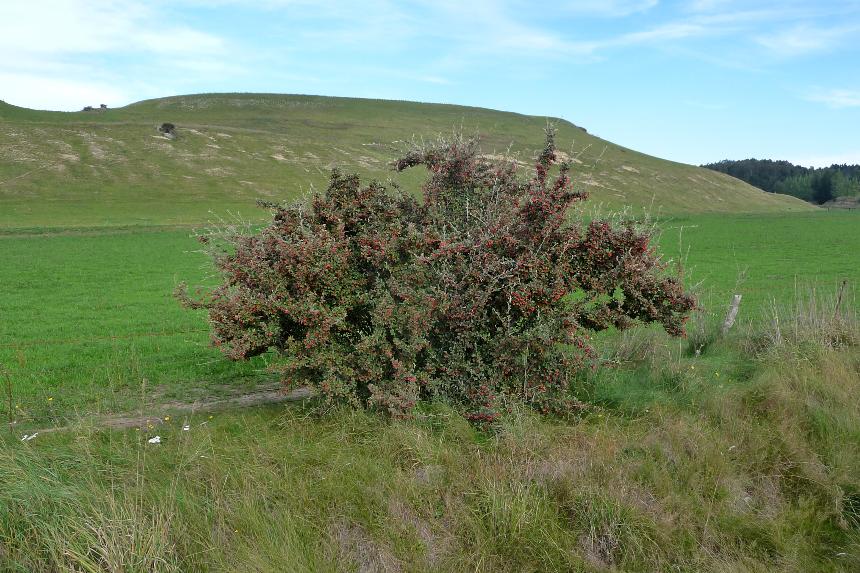
- a shrub or small tree with an upright or arching habit (2-3 m tall) that loses its leaves during winter.
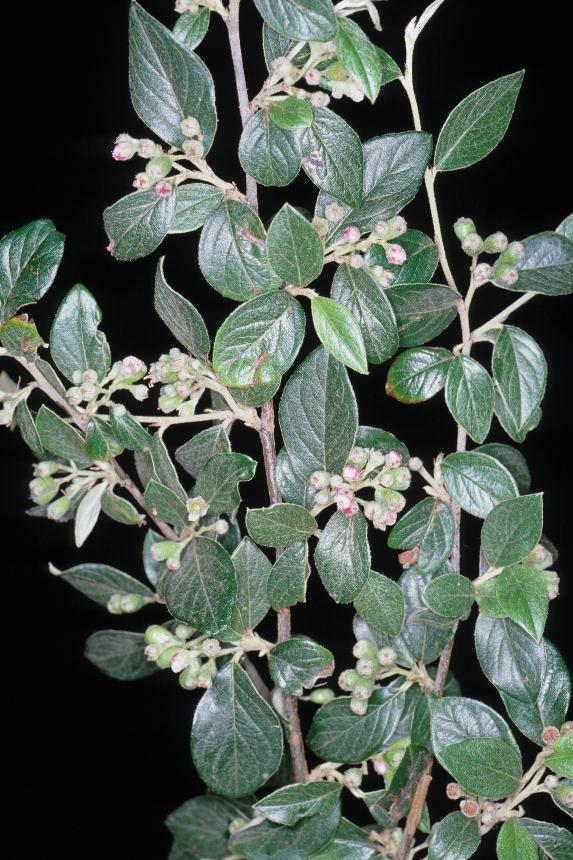
- its branchlets and the undersides of it sleaves are densely covered in felty hairs.
- its leaves are relatively small (20-35 mm long and 7-18 mm wide) and their upper surfaces become hairless and shiny as they mature.
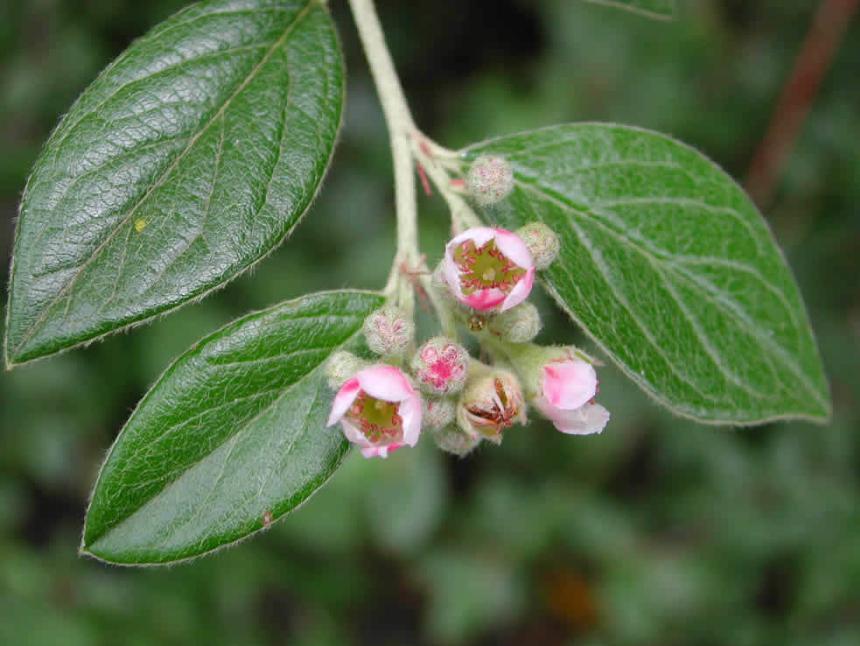
- its pink or pinkish-white flowers (about 10 mm across) are borne in clusters along the branches.
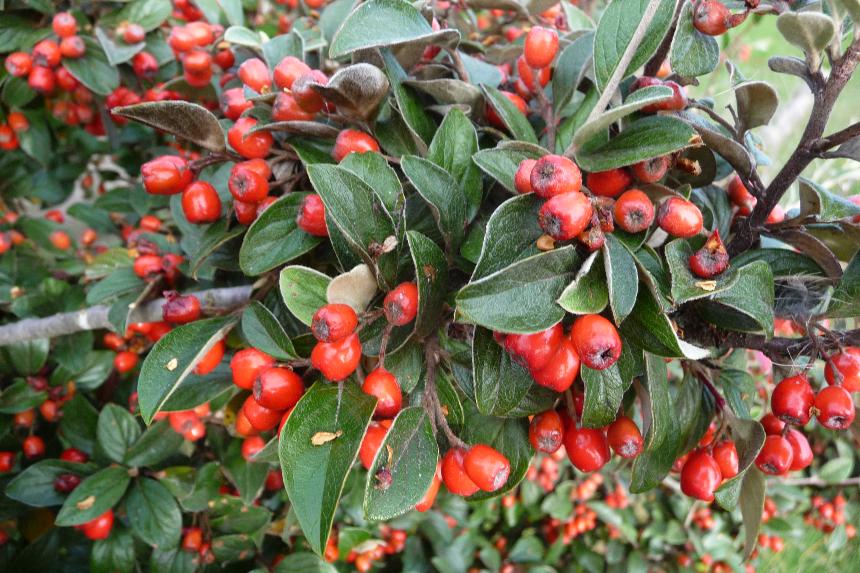
- its small fleshy 'berries' (5-10 mm across) turn orange-red or pinkish-orange as they mature and contain three small 'seeds'.
[From: Environmental Weeds of Australia]
Images
References
Biosecurity New Zealand 2012: Regional Pest Management Strategies Database. http://www.biosecurityperformance.maf.govt.nz/
Howell, C. 2008: Consolidated list of environmental weeds in New Zealand. DOC Research & Development Series 292: 42.