Class
Family
Genus



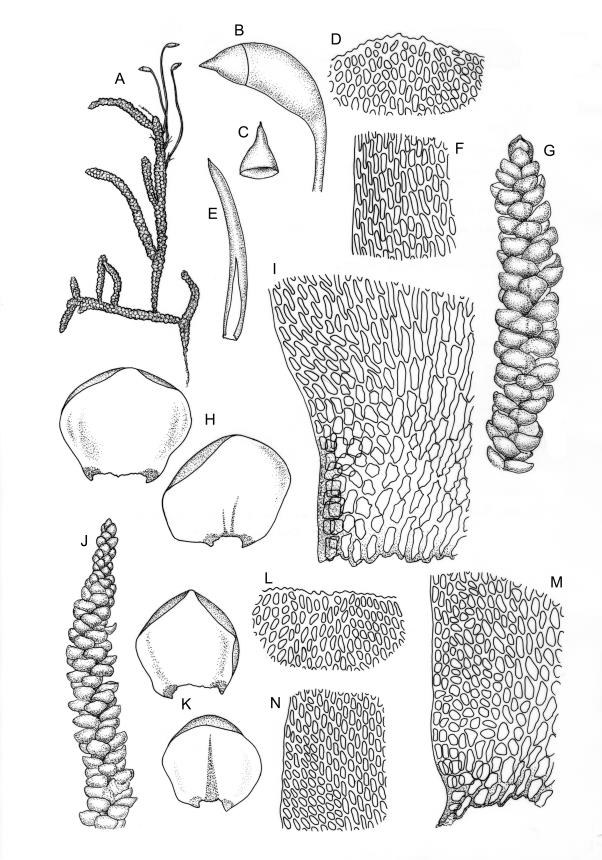
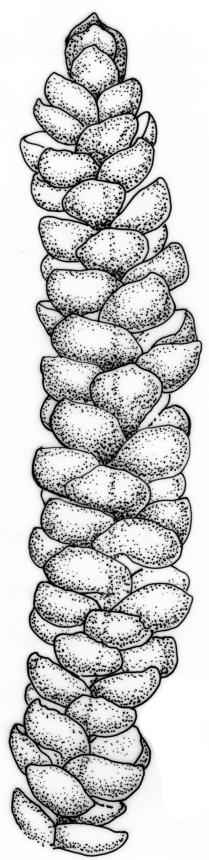
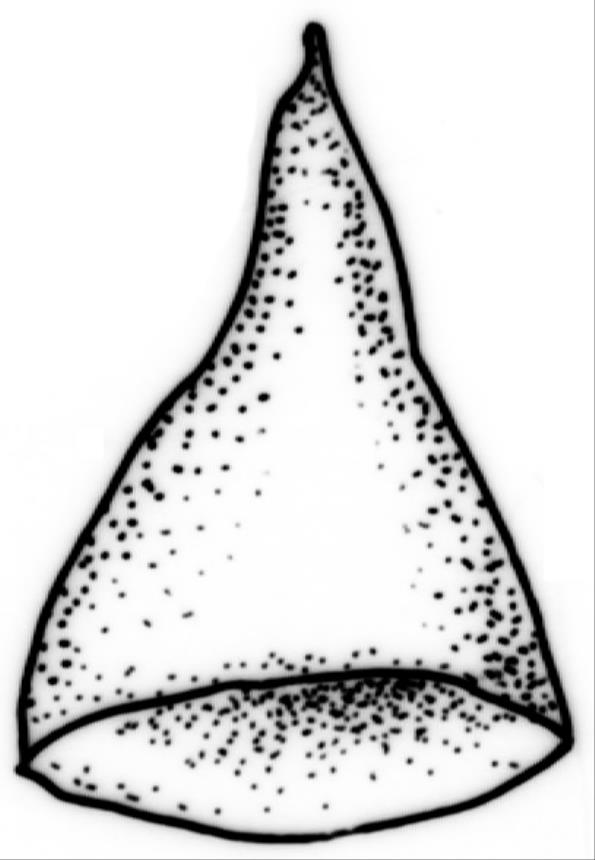
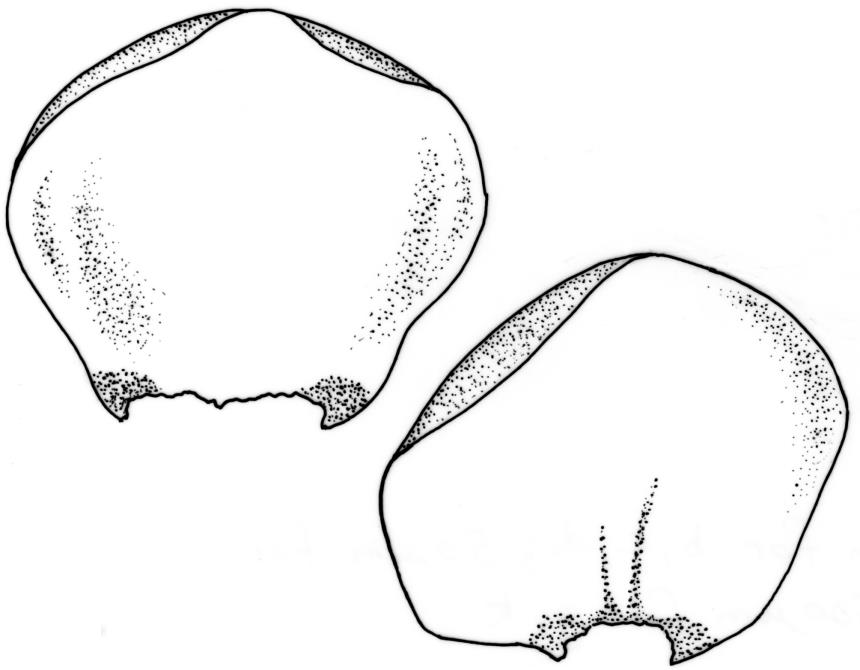
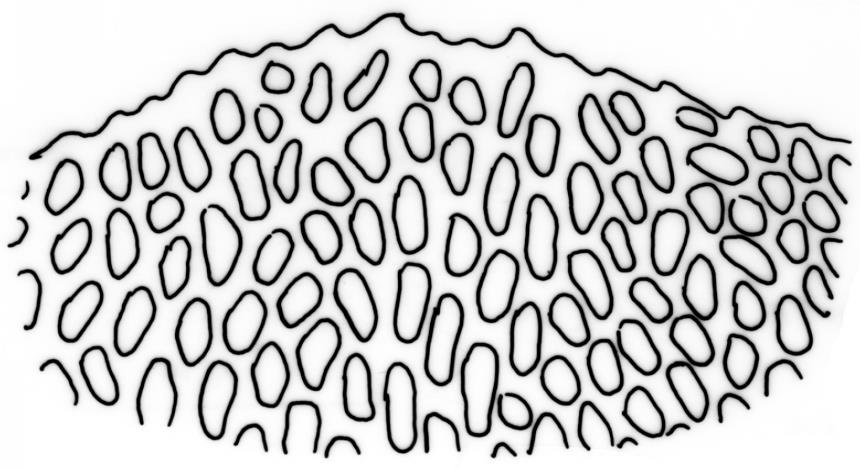
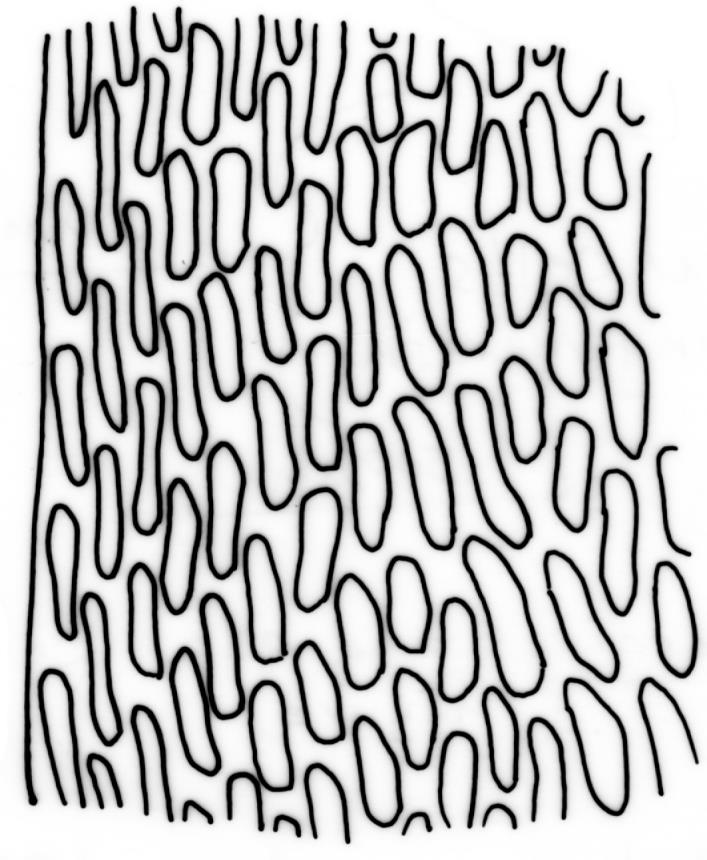
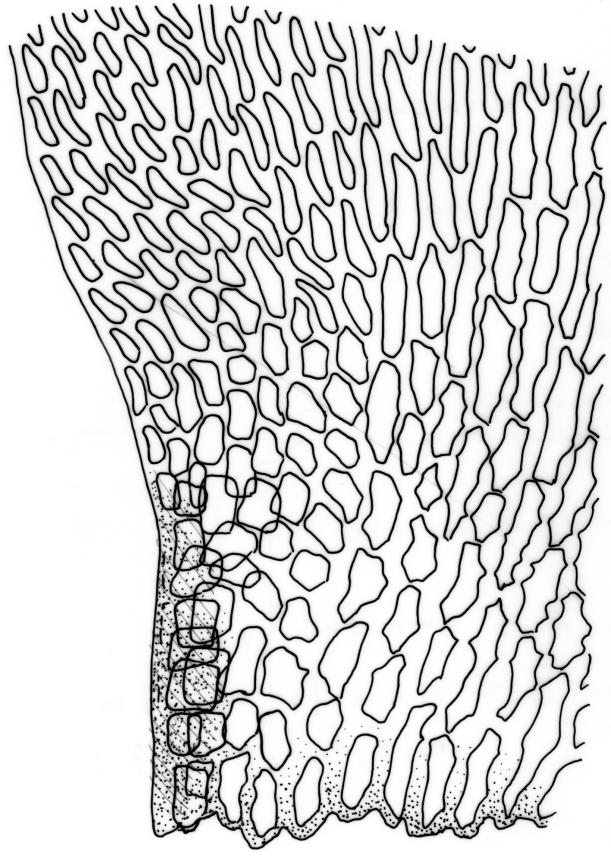
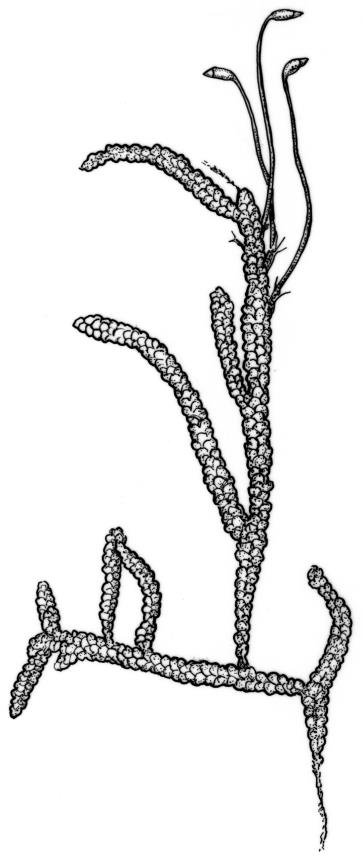
Plants usually robust, light to dark olive-green or brown, dull or slightly glossy, forming loose wefts on bark, rocks, rotten logs, and on the ground. Stems ± erect to scrambling, julaceous, attenuate, stipitate, sometimes subdendroid; in cross-section c. 350 × 280 µm with an outer layer of c. 4 cells surrounding a core of parenchyma and an indistinct central strand. Branches blunt to loosely cuspidate, often attenuate, 1.1–1.25 (–1.7) mm wide (including leaves), 0.9 mm wide towards the tips. Pseudoparaphyllia c. 225 × 145 µm. Stem leaves imbricate, inflated-smooth when moist, loosely wrinkled when dry, orbicular, wider than long, obtuse, cucullate, denticulate at the apex, (0.7–) 1.0–1.3 × 1.2–1.8 mm, with alar cells irregularly walled, porose, to form a dark group 8–12 cells wide and extending 6–8 cells from the leaf base. Costa weak usually double and failing below mid leaf, sometimes absent. Branch leaves smaller, with a smaller alar group, 0.75–0.9 × 1–1.25 mm. Mid laminal cells of branch leaves linear to short-linear, ± sinuous, thick walled, weakly prorate, sometimes weakly porose, 12.5–20 (–25) × 3.5–5.0 µm; becoming longer, wider and weakly porose towards the central base, 35–43 × 5–6 µm; at the apex irregularly short-rhombic, (7.5–) 10–15 (–18) × (2.5–) 5 µm, the marginal cells at mid leaf (12.5–) 15–20 × 3.75–5.0 µm, at the extreme margin 15–20 × 3.75 µm.
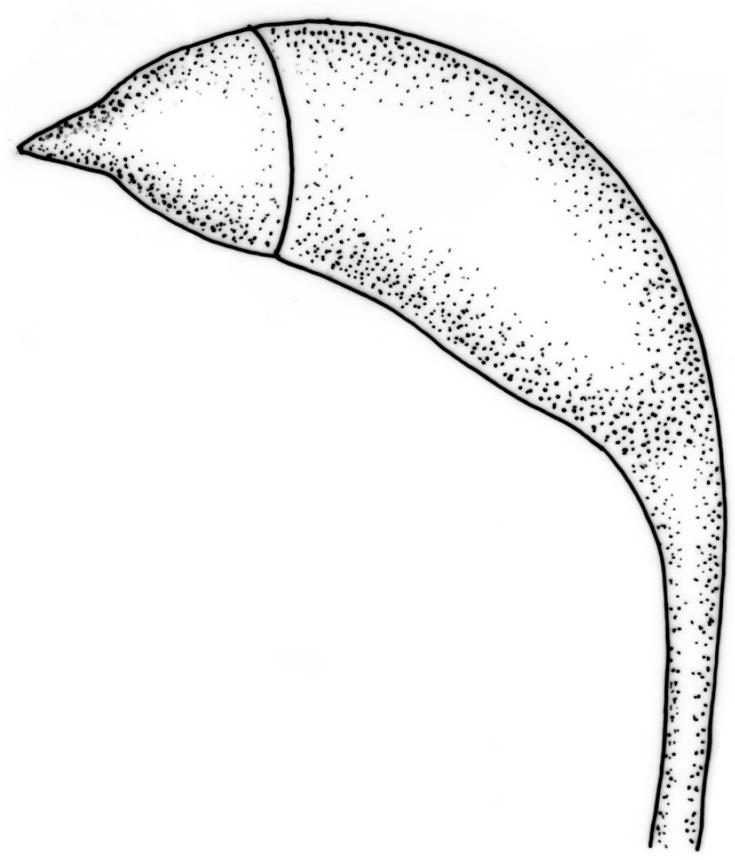
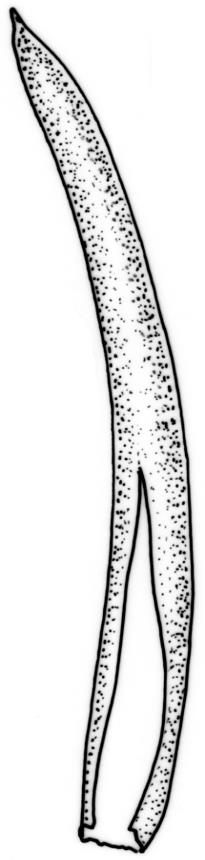
Setae to c. 3 cm, loosely twisted to the left. Capsules 1.75 × 0.5–0.6 mm; exothecial cells c. 39–43 × 12–15 µm. Operculum blunt to apiculate, 0.75 mm. Exostome teeth c. 440 µm long; endostome with a basal membrane c. ⅓ of exostome. Calyptra c. 2.5 mm. Spores 10–17 µm.
Sainsbury 1955, pl. 60, fig. 1; Tangney 2008, fig. 1.
Lembophyllum clandestinum forms robust, loose open mats and wefts of elongate, julaceous stems and branches, with leaves mostly glossy, obtuse and cucullate, deeply concave and cochleariform. The branches are typically attenuate, and often stoloniferous and rhizoidal at the tips. L. clandestinum has mid laminal cells linear to short linear and those of the basal and lateral margins are rhombic, or shortly elongated. The costa is typically absent or short double and faint. Alar cells are differentiated from the adjacent basal cells; they are usually pigmented and shorter to form a dark, porose, excavate group.
NI: N Auckland, including offshore islands (RT, GB, PK (Aorangi I.)), S Auckland (including Mayor I.), Hawke’s Bay, Gisborne, Taranaki (Taranaki Maunga), Wellington; SI: Nelson, Marlborough, Canterbury, Westland (Mt Sewell, Paparoa Ra; Otira; Haast Pass), Otago, Southland; St; Sn; Sol; A.
Australasian. Tasmania*, mainland Australia (Qld, N.S.W., A.C.T., Vic.*), Macquarie I*.
Lembophyllum clandestinum is most common in forest, on bark, rocks, rotten logs, and on the ground. It is also found on the same substrates in more open habitats, including subalpine shrubland and subalpine and alpine grassland. It ranges in altitude from sea level on the Auckland Islands, Stewart Island, and southern South Island, to 1650 m on Mt Arthur in Nelson.