Class
Family
Genus



Plants usually robust and rigid, light to dark olive-green or brown, dull or slightly glossy, forming loose wefts on bark, rocks, rotten logs and on the ground. Stems ± erect to scrambling, 30–60 (–100) mm, complanate to loosely julaceous, stipes (10–) 15–20 (–30) mm, fronds often irregular, 2(–3)-pinnate; variably complanate, often elongate in cross-section c. 800 × 610 µm, with an outer layer of 10–12 cells surrounding a core of parenchyma and an indistinct central strand. Branches straight or curved, complanate to julaceous. Stem leaves imbricate, inflated-smooth when moist, loosely collapsed-wrinkled when dry, broadly oblong-ovate, obtuse to widely acute, entire or denticulate at the apex, (1.9–) 2.2–2.5 (–3.0) × 1.2–1.6 mm, with alar cells irregularly walled and porose, forming a dense dark group 12–16 cells wide and extending 6–8 cells from the leaf base. Costa weak usually double and failing below mid leaf, sometimes absent. Branch leaves smaller, with a smaller alar group, 1.2–1.7 × 0.6–0.8 (–1.0) mm. Mid laminal cells linear, weakly prorate, weakly porose, (50–) 60–75 (–95) × 5 µm; becoming more porose towards the base, (25–) 35–60 × 8–10 µm; at the apex irregularly short-rhombic, c. 8–12 µm long.
Dioicous or pseudautoicous. Setae 4–5, or 8–13 mm. Capsules 1.8–2.0 (–2.2) × 1.0 mm; exothecial cells mostly 30–60 × 15–20 µm. Operculum blunt to apiculate, 0.6 mm. Exostome teeth c. 440 µm long; endostome with a basal membrane c. ⅓ of exostome. Calyptra c. 2 mm. Spores (12–) 13–14 µm.
| 1 | Plants light green to yellow-green, setae short, robust, 4–5 mm, with capsules held on the underside of fronds; fronds pinnate, frond axes and branches mostly complanate, untidy in appearance; leaves usually not in neat spirals, concave, obtuse, subobtuse or acuminate | C. arbuscula var. arbuscula |
| 1' | Plants darker, green to brown-green; setae elongate, slender, 8–13 mm, with capsules held above fronds; fronds loosely branched, frond axes and branches inflated and sub-julaceous; leaves neatly spiralled, very deeply concave, abruptly and distinctly mucronate | C. arbuscula var. tumida |
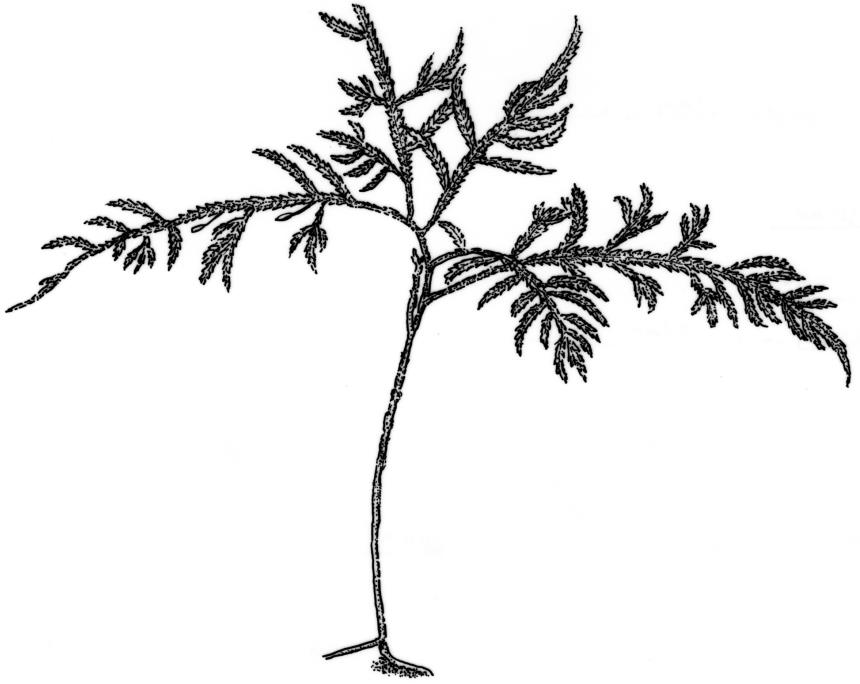
Typically, C. arbuscula has a robust dendroid habit with irregularly branched ± untidy fronds, and deeply concave cochleariform leaves which are collapsed-wrinkled when dry and inflated-smooth when moist. The frond axis leaves are usually complanate while those of the branches are subdistichous to loosely julaceous. The capsules often are borne on short, robust, arcuate setae from the underside of the fronds.
| Category | Number |
|---|---|
| Indigenous (Endemic) | 1 |
| Indigenous (Non-endemic) | 1 |
| Total | 2 |
A significant variant with varietal status – var. tumida – occurs in New Zealand.