Class
Family
Genus



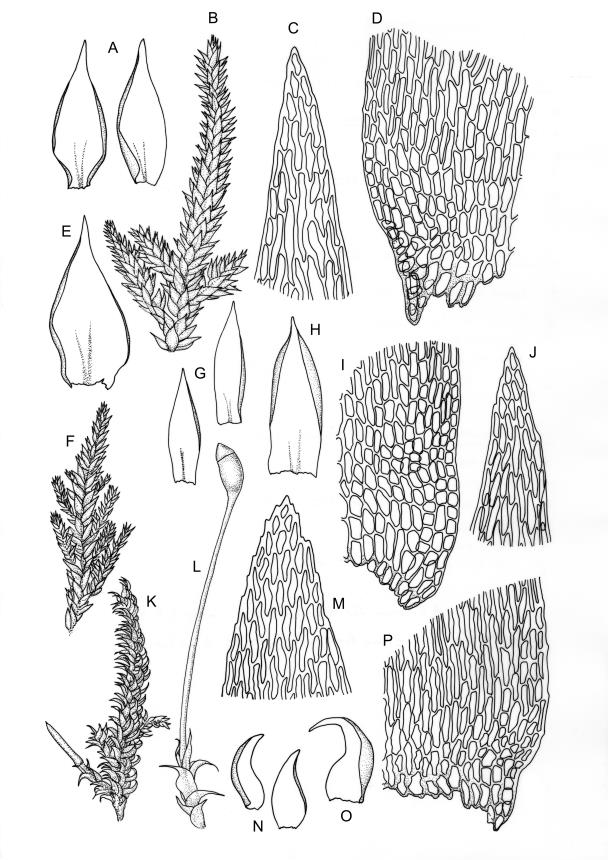
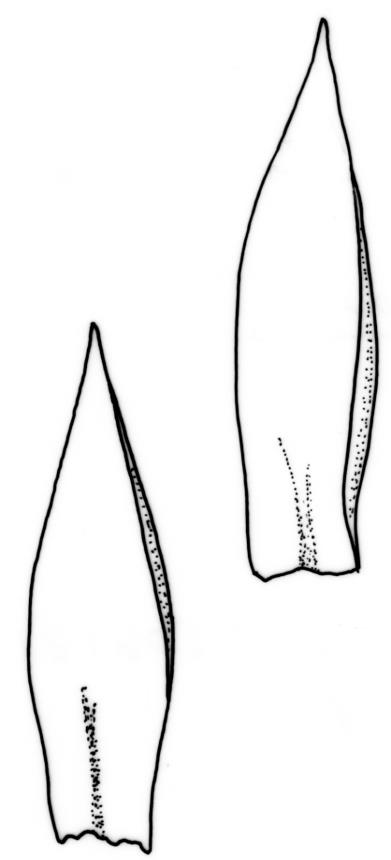
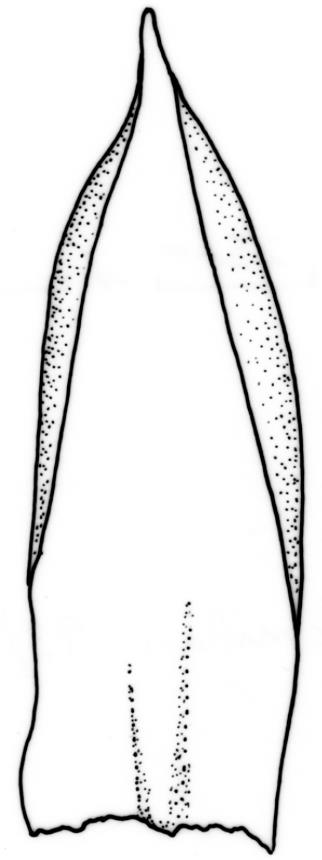
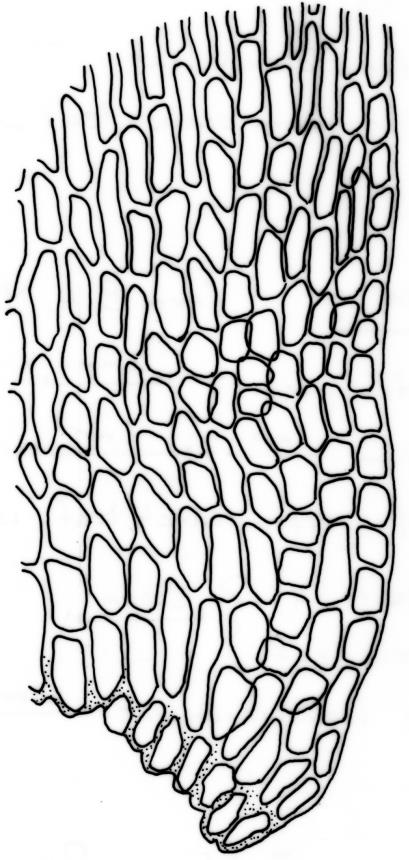
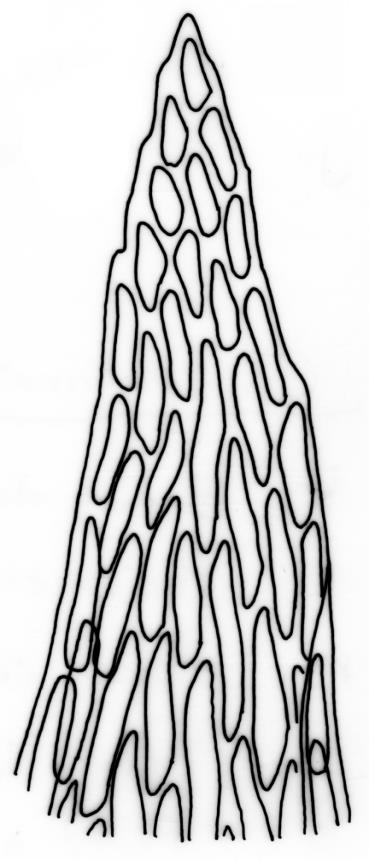
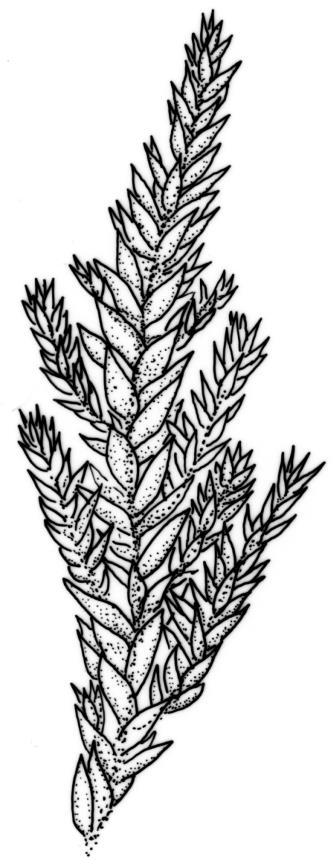
Plants slender to robust, 30–60 (–70) mm long, dark green or brown, dull or slightly glossy. Stems ± erect to scrambling, complanate, stipitate; in cross-section oval, 650 × 530 µm, with an outer layer of 7–10 cells surrounding a parenchyma and an indistinct central strand. Stipes 15–20 (–30) mm. Fronds densely and irregularly 1(–2)-pinnate, compact, fine and feathery. Branches straight, complanate. Frond axis leaves regularly imbricate, not or scarcely altered when dry, moderately concave, sometimes conduplicate, narrowly ovate-oblong, acute, entire, (1.7–) 2.0–2.2 × 0.6–0.9 mm, with alar cells forming an extensive and conspicuous group 22 cells wide and extending 16 cells from the leaf base. Branch leaves smaller and narrower, narrow-elliptic or lanceolate, with a smaller alar group, 0.9–1.5 × 0.2–0.4 mm, margins serrulate to denticulate above, sometimes denticulate to the lower margin. Costa double and failing below mid leaf, faint, sometimes absent, rarely single and extending to the mid leaf. Mid laminal cells weakly porose, (37–) 50–65 (–100) × 5 µm; becoming shorter, wider, and strongly porose below to form a weakly differentiated basal band (30–) 35–45 × 7–8 µm; those above shorter, 10–12 (–25) × 5 µm at the apex.
Dioicous. Setae 6–8 mm. Capsules inclined to horizontal, symmetric, c. 1.5–2 × 1 mm; exothecial cells mostly 30–45 × 18–20 µm. Operculum conic, apiculate, c. 0.6 mm long. Exostome teeth c. 575 µm; endostome with a basal membrane ½ the exostome. Calyptra c. 1.8 mm. Spores 15–18 µm.
Tangney 1997, figs. 6, 9, 15, 22.
K; NI: N Auckland, S Auckland, Gisborne, Hawke’s Bay, Wellington; SI: Nelson, Marlborough, Canterbury, Westland, Otago, Southland.
Endemic.
Common in lowland broad-leaved forest where it occurs mainly on the bark of trees, including on lianes, and on logs, rocks and exposed roots. On the Kermadec Is, it occurs as an epiphyte on Cyathea (tree fern) trunks. Altitudinal range: sea level to 1150 m on South I. (Mt Mytton, Nelson LD), to 740 m on North I. (Erua, Wellington LD); Kermadec Is: 300–360 m.
Camptochaete angustata is a distinctive species characterised by its small, fine, feathery fronds, weakly concave narrowly ovate-lanceolate leaves, with l:w > 3.5, serrulate margins and extensive alar cells. It is unlikely to be confused with any other species, although some forms of C. deflexa may be similar. These latter, however, have broader branch leaves that are ovate-acuminate rather than narrowly ovate-lanceolate (l:w < 2.5), mostly entire, more concave, and usually have fewer alar cells (see also discussion of C. deflexa below). In C. angustata there is usually a clear contrast between the fine narrow branch leaves and the broader leaves of the main stems. Camptochaete pulvinata also has numerous alar cells, but it is distinguished from C. angustata by its ovate and falcate secund leaves.